
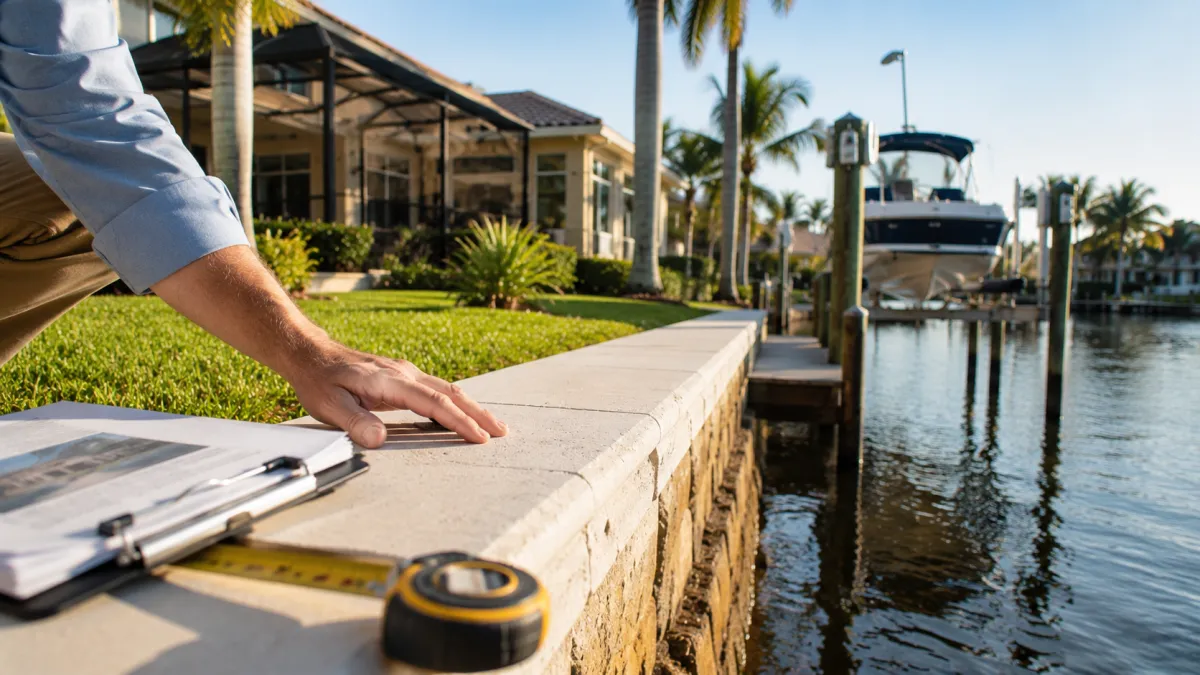
What I Check Before A Buyer Pays Luxury Money For An Apollo Beach Waterfront Home
I don’t trust a perfect sunset photo.
Not because the sunset is fake. Apollo Beach gives you some beautiful ones. But because a sunset photo can make a buyer forget to look at the seawall.
That happens more than people think.
I’ll walk into a waterfront home with a buyer, and the first few minutes are always emotional. Canal view. Pool. Boat lift. Sliders open to the lanai. Maybe a summer kitchen. Maybe the dock is sitting there clean and quiet like it doesn’t have a maintenance history.
The house feels expensive because it looks expensive.
That’s when my construction background kicks in.
Before I care about the wine fridge, I want to know how the house handles water, wind, age, repairs, and future costs. I want to know what’s behind the fresh paint. I want to know how the seawall looks, how the dock sits, how the roof is aging, what the flood exposure is, and what the insurance conversation sounds like before my buyer writes luxury money.
That matters this week because Apollo Beach is not the same market buyers fought through a few years ago. One current Apollo Beach market report shows 5.6 months of inventory, which points to a more balanced market. Realtor.com’s current Apollo Beach data also shows very different price levels by neighborhood, with Andalucia and Hemingway Estates showing median listing prices above $1 million, while MiraBay sits just under that mark.
Balanced does not mean cheap. It means buyers can be more careful.
And with Hillsborough County’s evacuation-zone tool active for 2026, plus recent reporting that Zone A expanded in places including Apollo Beach after lessons from prior storm surge and inland flooding, waterfront buyers need to ask sharper questions before they get attached to the view.
What Makes Apollo Beach Waterfront Homes Different From Regular Luxury Homes?
Apollo Beach waterfront homes are different because the land, water access, seawall, dock, lift, flood exposure, and storm readiness are part of the purchase. You’re not just buying a beautiful house. You’re buying a system that has to live beside water.
That’s the part buyers can miss.
A luxury kitchen is easy to understand. A custom pool is easy to understand. A wide canal view is easy to love.
But waterfront ownership has another layer. The seawall has a life. The dock has a life. The lift has motors, hardware, pilings, electrical, and weight limits. The exterior envelope of the house has to handle heat, humidity, wind-driven rain, and salt air. The grading around the lanai matters. The roof matters. The flood zone matters. The elevation matters.
I’ve walked homes where the inside looked like a magazine spread, but the exterior told the truth. Rusted fasteners near the dock. Soft fascia near a roof edge. A pool deck crack that kept going farther than I liked. Fresh stucco texture in one isolated area. None of those things automatically kill a deal, but they change the questions.
My job as an Apollo Beach realtor is not to make a buyer afraid of waterfront property. I love waterfront property. My job is to make sure the buyer understands the waterfront part of the property, not just the luxury part.
Why Do I Look At The Seawall Before The Kitchen?
I look at the seawall early because it can be one of the most expensive parts of a waterfront property to repair or replace. A beautiful kitchen is nice, but a failing seawall can change the whole financial picture.
A seawall is not decoration. It’s protection. It’s holding land where water wants to move.
I’m not a marine engineer, and I don’t replace a proper seawall inspection. But my commercial and residential construction years taught me to look for movement, cracking, leaning, erosion behind the wall, sinkholes near the cap, separated joints, rust stains, drainage issues, and patches that don’t match.
On one Apollo Beach walkthrough, the buyer was already talking about where they’d put outdoor furniture. I was looking at the grass near the seawall cap. It dipped in a way that didn’t match the rest of the yard. That little dip told me water might be moving where it shouldn’t. We brought in the right professional, and the buyer got a clearer picture before making a decision.
That’s how this should work.
Not panic. Not pressure. Just facts.
Recent Florida seawall cost guides show that repair and replacement pricing can vary widely based on length, material, access, permitting, exposure, and site conditions. I don’t quote those numbers as gospel because every property is different, but I do use them as a reminder that buyers should price seawall questions before closing, not after.
What Should Buyers Check On A Dock Or Boat Lift?
Buyers should check the dock structure, pilings, decking, lift capacity, lift motors, electrical, permits, and maintenance history. A dock can look fine in listing photos and still need real money.
This is one of the easiest places for emotion to take over.
A buyer sees a boat lift and starts picturing weekends on the water. I understand that. That lifestyle is the reason people shop waterfront homes Apollo Beach in the first place.
But I want to slow it down.
What size boat is the lift rated for? When were the motors serviced? Is the electrical clean and safe? Are there permits for the dock and lift? Are the pilings sound? Is the decking soft anywhere? Is there visible corrosion? Does the dock sit square? Are there signs of storm repair?
I once stepped onto a dock that looked fine from the lanai. From twenty feet away, it photographed well. Once I got closer, one section had just enough bounce to make me stop. Not dramatic. Not a movie scene. Just enough that my construction brain said, “Don’t ignore that.” We asked more questions and got the right eyes on it.
That buyer didn’t need a speech. They needed someone willing to walk all the way to the end of the dock before saying the house was clean.
How Do Flood Zones And Evacuation Zones Affect Luxury Buyers?
Flood zones and evacuation zones affect risk, insurance planning, storm preparation, resale conversations, and peace of mind. They don’t automatically make a home wrong, but they should be understood before the buyer commits.
This is where waterfront due diligence gets serious.
Hillsborough County’s HEAT tool lets residents search evacuation information by address, owner name, or parcel. That matters because evacuation zones are about storm surge risk and emergency planning. Flood zones are about flood insurance and mapped flood risk. They are related, but they are not the same thing.
A luxury buyer may be comfortable with risk. That’s fine. But comfort should be informed.
If I’m walking a canal home in Apollo Beach, MiraBay, Andalucia, Symphony Isles, or anywhere near the water, I want the buyer to look at flood information early. I want them to ask about elevation. I want flood insurance discussed early. I want homeowners insurance and wind coverage talked about before the inspection period gets tight.
I also want buyers to understand access. During a storm, your life is not just your house. It’s roads, bridges, evacuation routes, fuel, power, family needs, pets, and timing.
That doesn’t mean every waterfront buyer should run inland. It means a waterfront buyer should buy with eyes open.
Can A Renovated Waterfront Home Still Hide Old Problems?
Yes, a renovated waterfront home can still hide old problems. New finishes can cover old moisture, old electrical, old framing issues, past storm damage, rushed repairs, and work that was never properly permitted.
This is where my construction background is probably the most useful.
I like renovated homes. I like good craftsmanship. I appreciate a clean remodel. But I also know that finishes are the easiest part of a house to improve.
Bones are different.
On a walkthrough last month, I saw a waterfront home with beautiful floors and a fresh kitchen. The buyer noticed the island. I noticed one baseboard behind a slider that had a slight wave to it. Then I saw the caulk line looked newer than everything around it. That’s not proof of a major problem. It is a reason to ask about water intrusion, slider replacement, and permits.
Another time, in a higher-end South Shore home, the garage ceiling had one painted square that looked a little too fresh. Fresh paint in one weird spot is always a question, never a coincidence. We asked for inspection focus there, and the report gave my buyer a better negotiation position.
That’s not about being negative. That’s about not confusing new paint with new condition.
What Does Today’s Market Mean For Waterfront Buyers?
Today’s market means waterfront buyers have more room to be patient, but they still need to move with good information when the right home appears. Balanced inventory gives buyers breathing room, not permission to skip due diligence.
Apollo Beach’s current 5.6-month inventory reading suggests buyers and sellers are closer to balanced than they were during the tightest market. Realtor.com’s neighborhood data also shows that the waterfront and luxury parts of Apollo Beach are not one single market. MiraBay, Andalucia, Hemingway Estates, Harbour Isles, Belmont, Covington Park, and Del Webb Southshore Falls all behave differently.
That matters.
A canal home with direct bay access is not the same as an inland resale. A newer MiraBay home is not the same as an older home with an original seawall. A Sun City Center 55+ property is not competing with a luxury waterfront Tampa Bay lifestyle home. A Riverview or Wimauma new construction option may give a buyer more square footage and newer systems, but it won’t give the same water access.
So I don’t give one-size advice.
I help buyers compare the real choices. Waterfront lifestyle. New construction. Resale value. Insurance. Commute to Tampa or MacDill AFB. CDD fees in newer communities. Roof age. Renovation needs. Storm exposure. The way the home will actually live after closing.
Luxury buyers don’t need less due diligence because they have more budget. They need better due diligence because the repair numbers can be bigger.
When Should A Buyer Walk Away From A Waterfront Home?
A buyer should consider walking away when the risk is unclear, the seller will not provide reasonable information, the repair exposure is beyond budget, or the property no longer makes sense after inspections and insurance quotes. A beautiful view is not a good reason to ignore bad math.
I don’t like telling buyers to walk away unless the facts support it.
Sometimes a seawall concern can be priced. Sometimes a roof issue can be negotiated. Sometimes a dock repair is manageable. Sometimes a flood insurance quote is acceptable because the buyer understands it and plans for it.
But there are times when the smartest move is to let the house go.
If the seller can’t explain major renovations, that’s a concern. If dock and seawall work has no clear record, that’s a concern. If there are signs of moisture and nobody wants to slow down, that’s a concern. If insurance quotes come back in a way that breaks the monthly comfort level, that matters. If a luxury buyer has to drain their repair reserves just to close, I want them to think hard.
My promise is not that I’ll make every deal work.
My promise is that you’ll feel informed, supported, and never rushed.
FAQ
Do Apollo Beach Waterfront Homes Always Need Flood Insurance?
Not always, but many waterfront buyers should expect flood insurance to be part of the conversation. The requirement depends on the property, flood zone, loan type, and lender, so buyers should verify it early.
Should A Buyer Hire A Specialist For The Seawall And Dock?
Yes, when the seawall, dock, or lift condition matters to the purchase, bring in the right specialist. A general home inspection is helpful, but waterfront components may need a more focused review.
Is A Luxury Waterfront Home A Bad Idea During Hurricane Season?
No. Hurricane season does not make waterfront homes bad. It does make due diligence more important, especially around elevation, evacuation zone, flood coverage, roof condition, exterior drainage, seawalls, docks, and storm preparation.
How Do I Help Luxury Buyers Stay Clear-Headed?
I help luxury buyers stay clear-headed by walking the property like a builder before we talk like negotiators. We look at the structure, systems, water exposure, paperwork, insurance, and repair risk first. Then we decide what the view is worth.
That’s how I protect buyers without taking the excitement out of the process.
A great Apollo Beach waterfront home should still feel exciting. You should be able to picture the boat, the pool days, the quiet mornings, and the people you’ll invite over. But you should also know what you’re buying below the surface.
I want you to love the house after you understand it, not before.
If you want an Apollo Beach realtor who walks a waterfront home like a builder and negotiates like it’s his own money, reach out. And if you want to know what it’s like to work with me first, my Zillow and Google reviews say it better than I can.