
New The Waterfront Reality Check: Apollo Beach Real Estate Trends for June 2026 Post
I want to be straight with you about something most listings won't tell you.
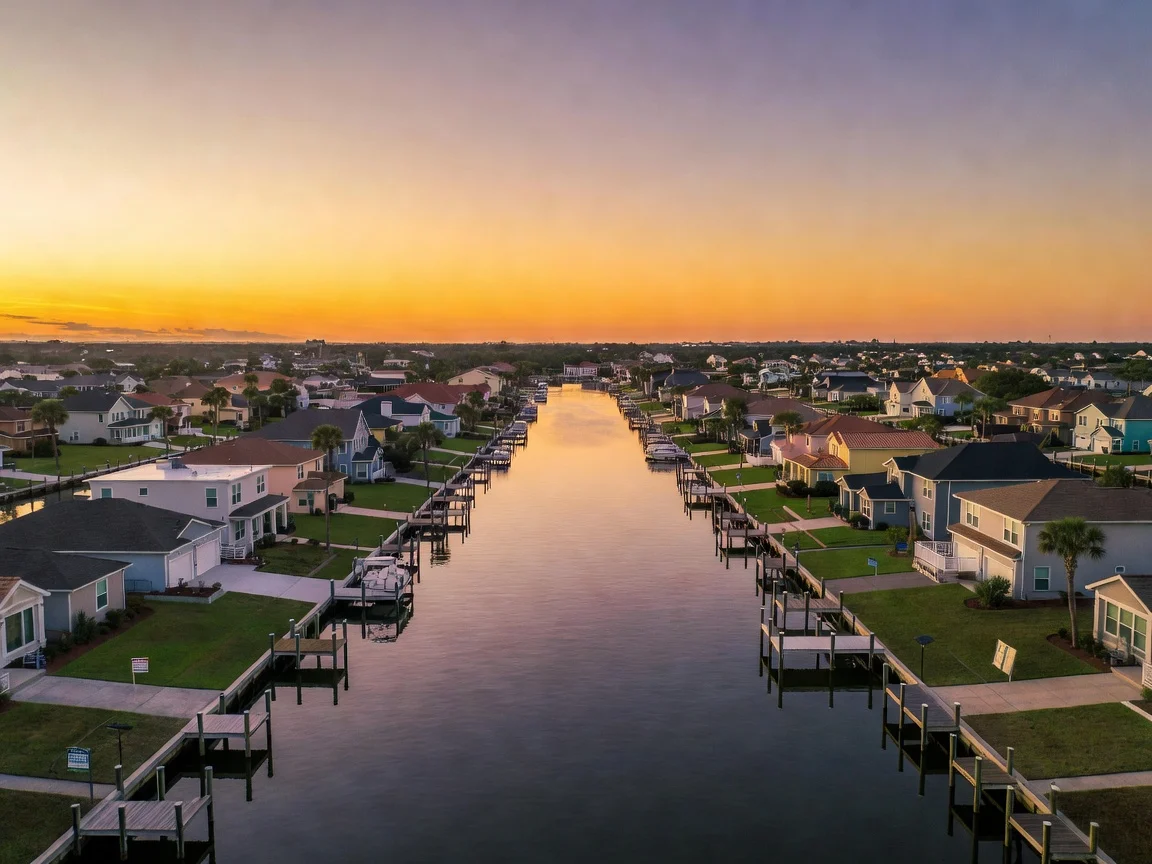
Apollo Beach is one of the most genuinely compelling waterfront communities in the entire Tampa Bay region. Fifty-five miles of residential canals feeding directly into Tampa Bay. Manatees in your backyard. A boat lift where other neighborhoods have a garage. MiraBay's resort pool on a Tuesday afternoon. There is a real lifestyle here that justifies real desire.
But there is also a growing gap in 2026 between what people think they are buying and what they are actually signing up for. And that gap does not show up on Zillow. It shows up on your monthly bank statement about six months after you close.
This is that conversation.
What Is Actually Happening to Apollo Beach Home Prices Right Now?
The headline numbers look reasonable on the surface. Apollo Beach home prices came in at a median of $495,000 in March 2026, up 6.1% compared to the prior year. By April, the median had ticked up slightly to around $522,990 across active listings.
So prices are holding. Appreciation is positive. That sounds like a healthy market, and in many respects it is.
But here is the number that should get your attention: homes in Apollo Beach are now sitting on the market for an average of 115 days before going under contract, compared to 79 days just one year ago. That is a 45% jump in days on market in twelve months. Properties are not flying off the shelf the way they were in 2022. Buyers are circling, doing the math, and in many cases walking away once the full carrying cost picture comes into focus.
That slowdown is not a sign of a broken market. It is a sign of a market that is recalibrating, where buyers have finally gotten the leverage to ask harder questions and sellers have to be ready with honest answers.
Why Is Insurance the Biggest Variable Nobody Models Correctly?
If I had to name the single thing that derails more Apollo Beach purchases than anything else, it would not be the interest rate. It would not be a failed inspection. It would be the moment a buyer gets their insurance quote and realizes the monthly payment they budgeted is no longer the monthly payment they will actually be making.
Apollo Beach is genuinely one of the most insurance-complex communities in the entire Tampa metro. The reasons are structural, not cyclical. The community sits at an average elevation of just 7 feet, is threaded with approximately 55 miles of residential canals, and carries direct Tampa Bay frontage, which means flood risk exists across virtually the entire community, not just in FEMA-designated high-risk zones.
Standard homeowners insurance does not cover flood damage. Full stop. A separate flood policy is essential for Apollo Beach homeowners, and that is true whether your home is canal-front, bay-facing, or in a master-planned community like Waterset or MiraBay sitting a half mile from the water.
Layer on top of that the base homeowners premium. The average homeowners insurance cost in Apollo Beach runs around $2,916 per year, though waterfront canal-front and bayfront properties routinely exceed that figure due to elevated wind and storm surge exposure. For older homes near the Flamingo Canal area built in the 1960s and 1970s, carriers are applying surcharges for roof age that can push annual premiums significantly higher.
When you stack homeowners insurance, flood insurance, and potential wind mitigation costs, a waterfront buyer in Apollo Beach should be budgeting $500 to $800 per month in insurance alone before the mortgage, the HOA, and the property tax. That number changes the affordability math on almost every deal.
What Are the Hidden Infrastructure Costs of Waterfront Ownership Here?
This is the part that first-time Florida waterfront buyers consistently underestimate, and experienced buyers who moved here from inland markets underestimate it too.
Waterfront ownership in Apollo Beach comes with a maintenance layer that simply does not exist for properties a few miles east. The most significant hidden costs of owning waterfront in Tampa Bay include seawall replacement at potentially $500 to $1,000 or more per linear foot, higher annual insurance premiums for both homeowners and flood coverage, and accelerated wear and tear on docks and exteriors from saltwater exposure. Annual waterfront cost add-ons can exceed $30,000 in a heavy maintenance year.
A seawall inspection should be non-negotiable before you place an offer on any canal-front property in this community. Older seawalls in the original Apollo Beach neighborhoods were built in the 1970s and many are approaching or past their functional lifespan. Replacing a seawall is not a minor repair. It is a five-figure to potentially six-figure project depending on the linear footage and condition of the cap and batter pile system. If a seller has not maintained it, that liability transfers to you at closing.
Beyond seawalls, saltwater environments accelerate wear on exterior surfaces, hardware, windows, roofing materials, and HVAC systems. Docks, boat lifts, and canal-facing pool equipment all require more frequent servicing than their inland counterparts. The lifestyle is real and it is worth it for the right buyer. But the lifestyle has a maintenance premium built into it, and buyers who do not model that cost before purchasing find out the hard way twelve to eighteen months in.
What Is Happening With Short-Term Rental Investors and How Is It Shaping Inventory?
This is a dynamic I am watching closely right now, because it is quietly reshaping the available inventory in Apollo Beach in ways that benefit certain buyers significantly.
During the 2021 and 2022 boom cycle, a meaningful number of investors purchased Apollo Beach waterfront properties with short-term rental income as the primary investment thesis. The community's canal access, MiraBay amenities, and Tampa Bay proximity made it an appealing pitch. The numbers worked on paper.
The problem is that Apollo Beach is a highly seasonal short-term rental market, and not every investor who bought during the frenzy modeled the full seasonal revenue range. March and April bring strong occupancy and premium nightly rates. September is a different story entirely. Revenue drops sharply in the off-peak months, insurance costs do not, HOA fees do not, mortgage payments do not, and the seawall does not care what the calendar says.
Investors who underwrote their returns at peak-season occupancy averages are now feeling the pressure of a reality that does not match the spreadsheet. Apollo Beach resale inventories increased 78.52% from 2024 to 2025, and a meaningful share of that inventory surge reflects investors choosing to exit rather than continue absorbing the carrying cost gap during slow months.
For primary residence buyers, this is an opportunity. Fatigued investor sellers are negotiating. They are paying closing costs. They are accepting price reductions they would not have entertained eighteen months ago. If you are buying to live here, this is your window to find waterfront properties at terms that simply did not exist during the boom.
What Is the Right Strategy for Buyers in Apollo Beach Right Now?
The market is giving buyers more time and more leverage than they have had since before the pandemic. Use both.
Median home prices in Apollo Beach are hovering in the $430,000 to $515,000 range in 2026, with homes generally moving within 28 to 115 days depending on condition and pricing accuracy. The spread in days on market tells you everything about how important pricing and condition are. Well-maintained, accurately priced properties in desirable canal-front positions are still moving. Overpriced or deferred-maintenance homes are sitting for months.
Here is what due diligence looks like in this market specifically. Get a flood zone confirmation from FEMA's flood map before you fall in love with any property. Get an insurance quote before you submit an offer, not after. Request seawall inspection documentation and insist on an independent marine contractor evaluation if the seller cannot provide recent service records. Review any HOA documents for special assessments, particularly in communities that share canal infrastructure or waterfront maintenance costs.
For properties that have crossed the 75-day mark on market, you have genuine negotiating leverage. Sellers who may not always have complete technical answers about a property's flood and storm performance history can still provide valuable insight through the home's documented maintenance and repair record. Ask for it. A seller who has maintained their seawall, updated their roof, and carried proper wind mitigation documentation is a seller worth paying a fair price for. A seller who cannot provide those records is a seller who should be compensating you for the uncertainty in the purchase price.
Is Apollo Beach Still Worth Buying in June 2026?
For the right buyer, without question.
The fundamentals that make Apollo Beach compelling have not changed. The canal access is finite. Waterfront properties hold their value exceptionally well in supply-constrained coastal markets because you cannot manufacture more of them. MiraBay continues to be one of the strongest value propositions in Tampa Bay luxury real estate for families who want waterfront living without South Tampa pricing. The broader Tampa Bay region continues to attract corporate relocations and population growth that underpin long-term demand.
What has changed is the cost structure of ownership. Insurance is permanently higher. Maintenance is permanently more complex. The carrying costs that can be glossed over during a hot market become very visible when the market slows and buyers have time to calculate them properly.
The buyers who thrive here in 2026 are the ones who go in clear-eyed. They have modeled every line item before they make an offer. They know what the seawall looks like. They have their insurance quote in hand. They are buying the waterfront lifestyle because they want to live it, not because they expect a fast flip.
That buyer will do very well here. Apollo Beach rewards commitment and preparation. It always has.